
DiamondAvenue.com – A Brief Diamond History
Follow the story of diamonds from ancient India and early international trade to the development of faceting, brilliant cuts and modern diamond-cutting technology.
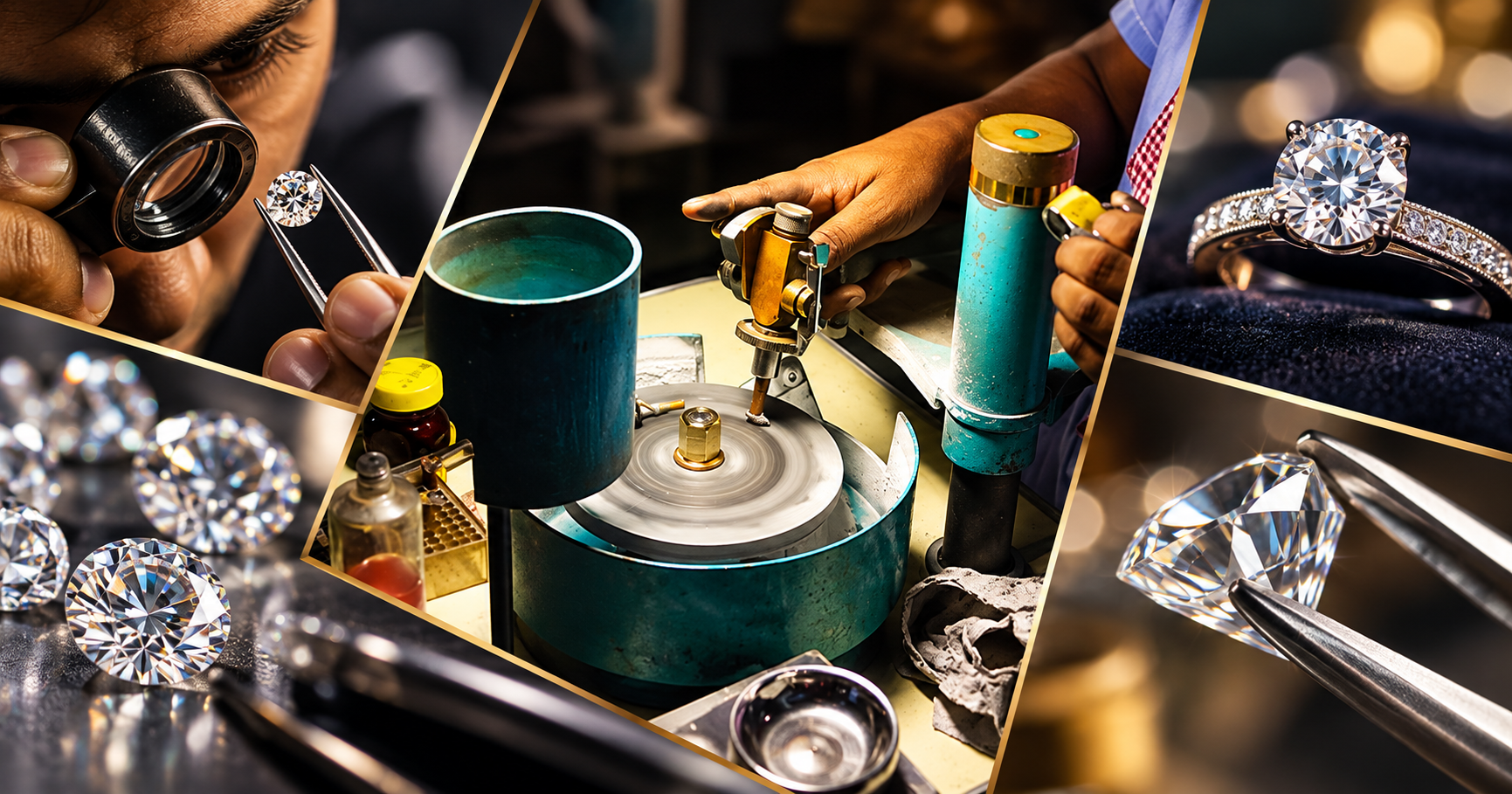
The history of diamond cutting is the story of learning how to shape one of nature’s hardest materials so that it interacts more effectively with light. Early diamonds were often appreciated in their natural crystal form, with only limited polishing applied to improve their surfaces.
As tools and techniques improved, cutters began adding and arranging facets to increase brightness, fire and scintillation. Each major cutting development built upon earlier experience with diamond crystal structure, proportion, symmetry and polishing.
In modern gemology, cut describes a diamond’s proportions, symmetry, polish and interaction with light. Shape refers to its visible outline, such as round, oval, pear or emerald-shaped.
Learn more about diamond cut and diamond shape.
The Earliest Diamond Trade
Diamonds in Ancient India
India is recognized as the earliest major source of diamonds. Stones were recovered primarily from river gravels and other alluvial deposits rather than from deep underground mines.
Early Written Records
Diamond mining and trade in India are documented by at least the fourth century BCE. The Arthashastra, traditionally associated with Kautilya, is frequently cited among the earliest surviving texts to discuss diamonds, their physical qualities, trade and taxation.
Strength, Protection and Status
Diamonds were valued for their rarity, hardness and luster. They acquired religious, protective and royal associations and circulated through trade routes connecting India with western Asia and the Mediterranean world.
Early Practical Uses
In addition to their use as precious objects, diamonds were valued for their hardness. Historical evidence indicates that diamond points and diamond-bearing tools were used for engraving, drilling and working other hard materials.
The Growth of European Diamond Cutting
Natural Crystal Forms
Many early European diamonds retained their natural octahedral form. Cutters could polish existing crystal faces or remove surface imperfections, but extensive faceting remained difficult.
Expanding European Trade
During the later Middle Ages, Mediterranean trading centers—particularly Venice—helped carry diamonds and other luxury goods into Europe. Bruges and later Antwerp developed into important centers for diamond trading and cutting.
More Advanced Cutting Techniques
Improvements in diamond polishing, sawing and bruting allowed cutters to create increasingly complex facet arrangements. These developments transformed diamonds from lightly polished natural crystals into carefully proportioned gemstones.
Amsterdam and Antwerp
From the seventeenth century onward, Amsterdam and Antwerp became highly influential centers of the European diamond trade and cutting industry. Skilled cutters working in these cities helped refine early brilliant-style cuts.
The Evolution of Diamond Cuts
Diamond-cutting styles did not develop in a perfectly straight sequence. Different styles overlapped, varied by location and continued to be used after newer designs appeared. The following is a simplified chronology of several influential cuts.
1. Point Cut
Medieval period
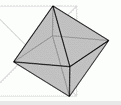
The natural octahedral crystal was polished while its pointed form was largely preserved. Little material was removed from the original diamond.
2. Table Cut
Fifteenth century

The upper point of the natural octahedron was removed to create a flat table facet. Additional polishing improved the view into the stone.
3. Old Single Cut
Sixteenth–seventeenth centuries
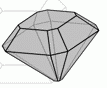
Additional crown and pavilion facets moved diamond design closer to the more complex brilliant-style cuts that followed.
4. Mazarin Cut
Late seventeenth century
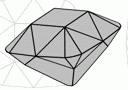
Traditionally associated with Cardinal Mazarin, this early double-cut brilliant used additional facets to improve light performance. The exact historical attribution remains uncertain.
5. Peruzzi Cut
Late seventeenth–early eighteenth century
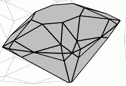
This more developed brilliant-style design added further crown and pavilion facets. It is traditionally associated with Venetian cutter Vincent Peruzzi, although the attribution is not firmly documented.
6. Old European Cut
Late nineteenth–early twentieth century
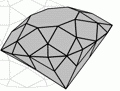
The old European cut commonly featured a round outline, high crown, small table, deep pavilion and visible culet. It was an important predecessor of the modern round brilliant.
7. Tolkowsky’s Round Brilliant
1919
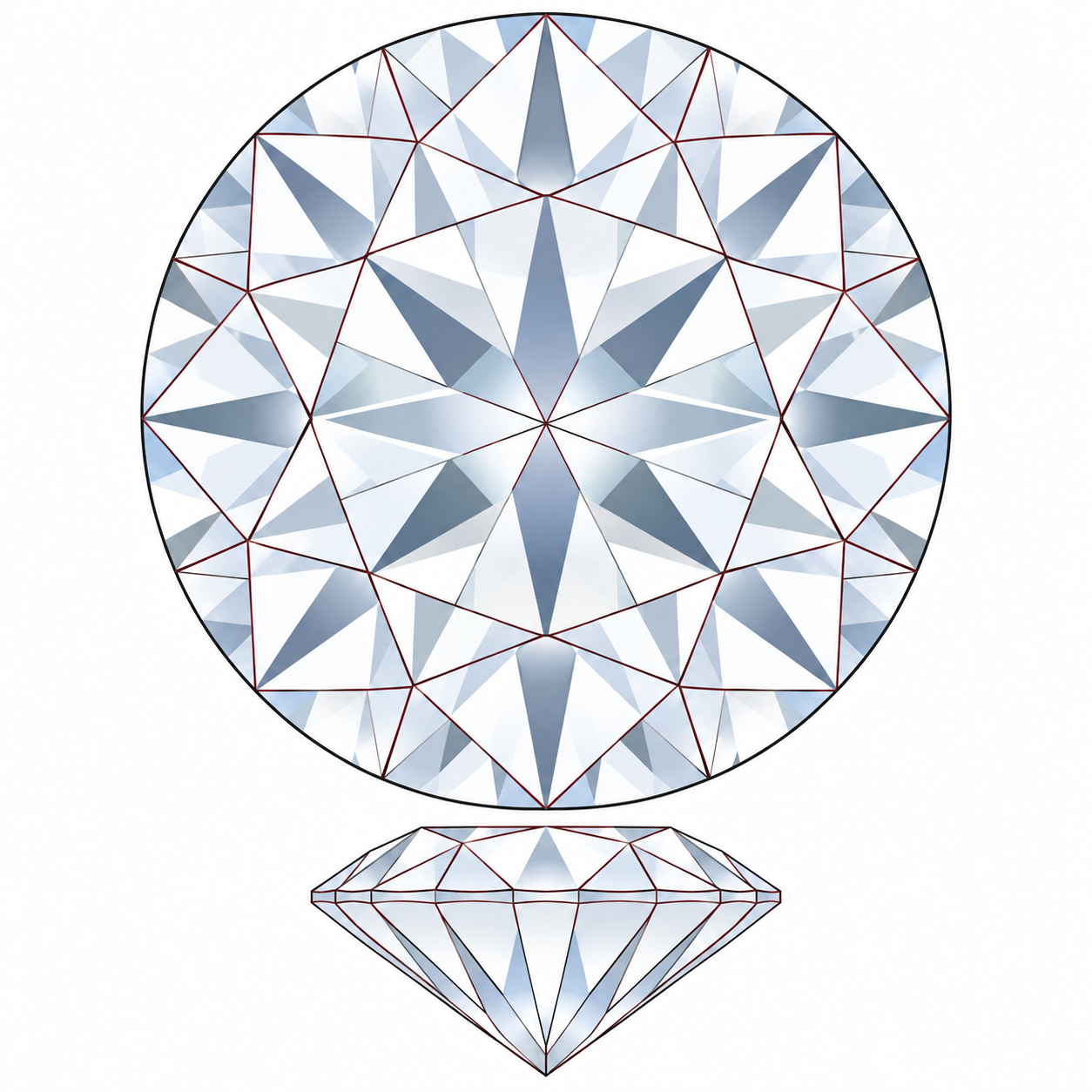
Marcel Tolkowsky published an influential analysis of round-brilliant proportions intended to balance brilliance and fire.
8. Modern Diamond Cuts
Twentieth century–present
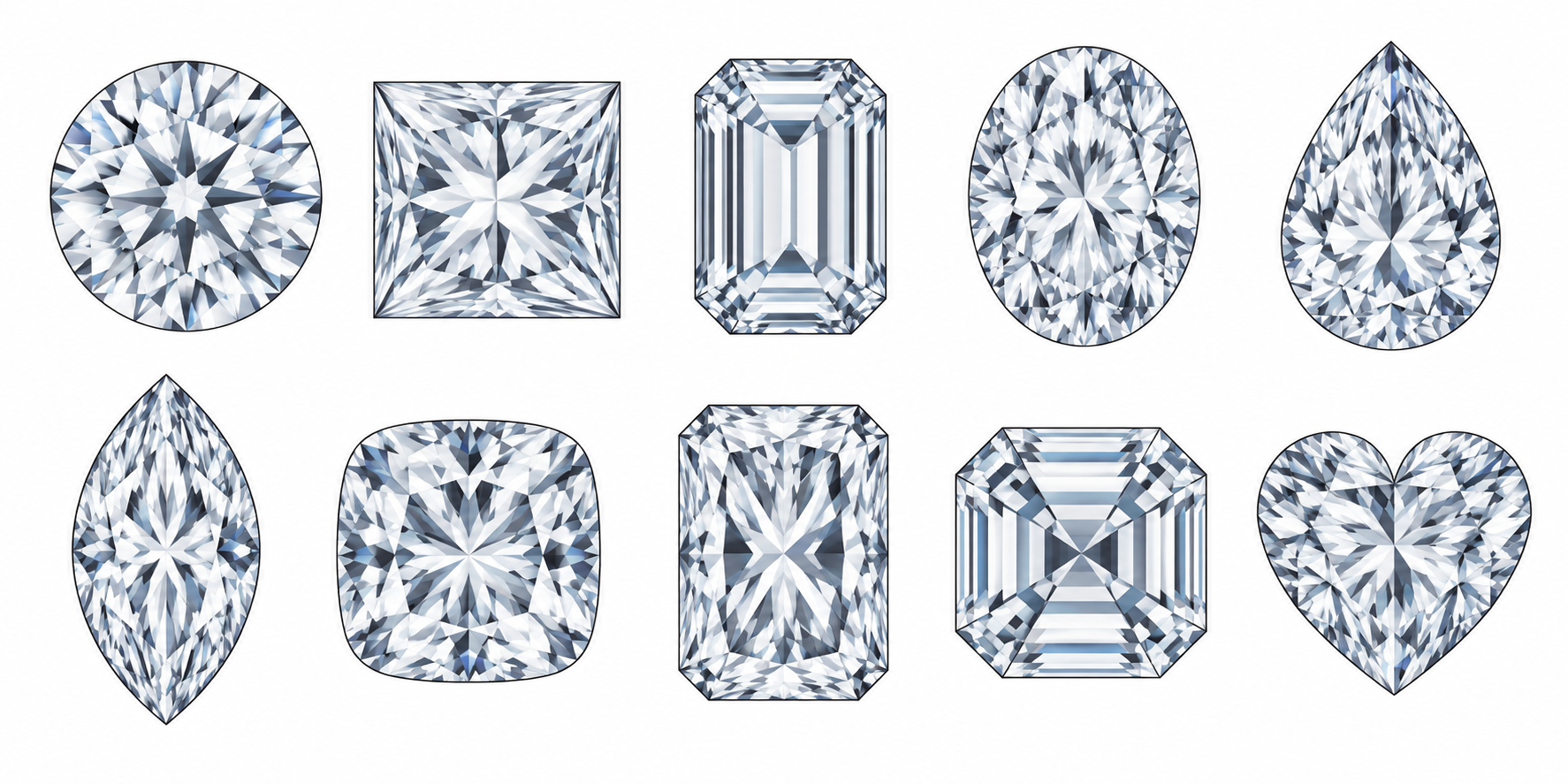
Modern cutters use precision measuring, optical modeling, lasers and computerized planning to balance beauty, clarity and retention of the original diamond weight.
Tolkowsky and the Modern Round Brilliant
In 1919, Belgian-born engineer and diamond cutter Marcel Tolkowsky published Diamond Design. His work used mathematical and optical analysis to describe proportions intended to produce an effective balance of brilliance and fire in a round brilliant diamond.
Tolkowsky’s work became highly influential, but modern diamond-cut evaluation is not based on one mandatory set of proportions. Cut quality also depends on the interaction of table size, crown angle, pavilion angle, total depth, girdle, symmetry, polish and other features.
Contemporary cutters use three-dimensional scanning, computer modeling and laser technology to plan a finished diamond. The goal may involve balancing visual beauty with weight retention, managing inclusions and selecting the most appropriate shape for the original rough crystal.
Continue with Diamond Cut and Diamond Shape to learn how these factors affect a finished diamond’s appearance.