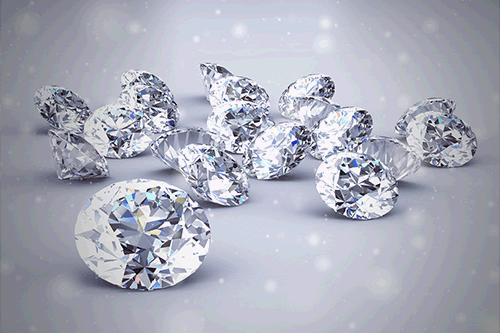
Amazon Collection
Browse loose diamond selections and related diamond products available through Amazon.

Browse loose diamond selections and related diamond products available through Amazon.
Browse loose diamond listings associated with Dazzlingrock Collection.
Browse loose diamond listings associated with GemHub through Amazon.
Browse loose diamond listings associated with Houston Diamond District through Amazon.
Browse loose diamond listings associated with TUHE through Amazon.
Affiliate Disclosure: DiamondAvenue.com may earn a commission from qualifying purchases made through affiliate links at no additional cost to you.
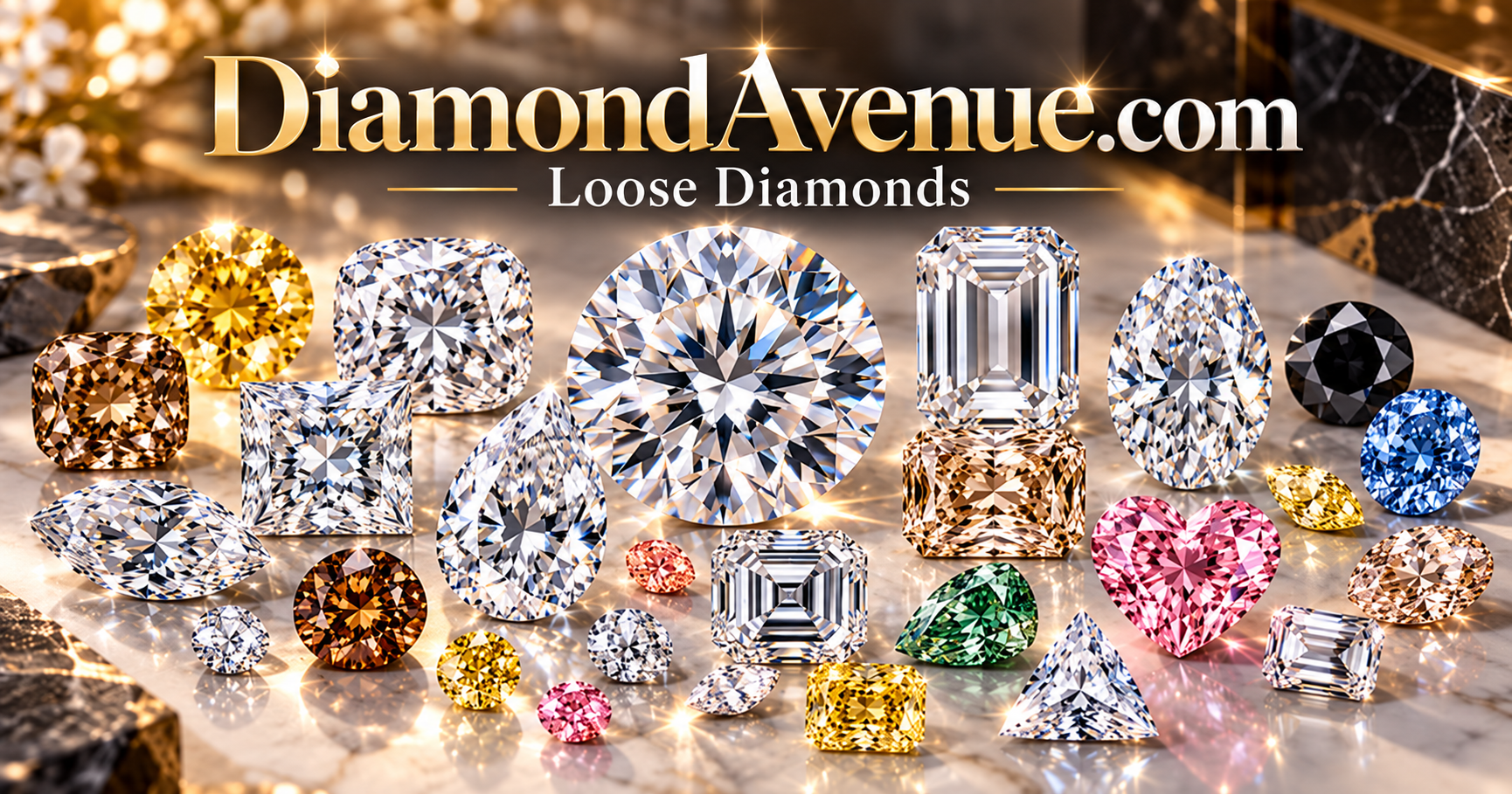
Buying a loose diamond allows you to select the diamond separately from the jewelry setting. This gives you an opportunity to compare diamonds according to their individual characteristics before deciding whether the stone will become part of an engagement ring, pendant, earrings or another piece of fine jewelry.
A loose diamond can also be examined more completely than a mounted diamond. Its weight, proportions, color, clarity, girdle, inclusions and other characteristics can be evaluated without a jewelry setting hiding portions of the stone.
Whether you are buying a diamond to wear and enjoy or considering a diamond because of its rarity and possible long-term value, understanding what you are buying is extremely important.
When a diamond is being purchased primarily for jewelry, beauty and personal preference should normally be major considerations.
Look for a diamond that provides the combination of brilliance, size, color, clarity and shape that appeals to you while remaining within your budget.
You do not necessarily need the highest grade in every category. A diamond with a slightly lower color or clarity grade may look virtually identical to a higher-graded diamond when viewed without magnification, while costing considerably less.
The goal is generally to find the combination of characteristics that produces the appearance you want rather than simply purchasing the highest grades shown on a grading report.
Purchasing a diamond primarily as an investment involves different considerations. Diamonds are physical assets and should not be assumed to appreciate in value simply because they are diamonds.
Ordinary commercial-quality diamonds are widely available. Investment interest is more commonly associated with diamonds possessing unusual rarity, exceptional quality, important size, desirable natural color, historical significance or documented provenance.
An investment-minded buyer should pay particular attention to independent laboratory documentation, natural versus laboratory-grown origin, treatments, rarity, comparable market prices and the potential resale market.
Remember that the price paid at retail and the amount that can later be obtained through resale are two different things. A diamond should never be considered a guaranteed investment.
The traditional starting point for comparing loose diamonds is the Four C's: Cut, Color, Clarity and Carat Weight. Each characteristic affects a diamond's appearance, rarity and price, but the Four C's should be considered together rather than individually.
Cut has an enormous influence on the appearance of a faceted diamond. Properly proportioned facets allow light entering the diamond to interact with the stone and return toward the viewer, producing brightness, fire and scintillation.
A larger diamond with poor proportions may appear less lively than a slightly smaller diamond with superior proportions and workmanship.
Pay attention to cut grade when available, as well as polish, symmetry, depth, table percentage and the diamond's actual face-up appearance.
Most traditional colorless-to-light-yellow diamonds are evaluated according to the absence of noticeable body color. The familiar diamond color scale extends from colorless diamonds through increasingly noticeable yellow or brown coloration.
The difference between neighboring color grades can sometimes be difficult to see once a diamond is mounted. The color of the metal used in the jewelry setting can also influence how the diamond appears.
Clarity describes the relative absence of internal characteristics known as inclusions and surface characteristics known as blemishes.
Location can be just as important as the number or size of inclusions. An inclusion directly beneath the table may be more noticeable than an inclusion near the edge of the diamond.
For jewelry, many buyers look for an eye-clean diamond rather than paying a substantial premium for a clarity grade whose improvement can only be appreciated under magnification.
Carat is a measurement of weight, not a measurement of a diamond's physical diameter.
Two diamonds having the same carat weight can appear to be different sizes when viewed from above because their proportions and dimensions are different.
Compare the diamond's millimeter measurements as well as its carat weight. A poorly proportioned diamond can carry unnecessary weight below the girdle where it contributes little to the apparent size of the stone.
Shape describes the outline of the diamond when viewed from above. The round brilliant is the traditional choice, but loose diamonds are available in many shapes including oval, cushion, emerald, pear, marquise, princess, radiant and Asscher-style cuts.
Shape is largely a matter of personal preference when purchasing jewelry. It can also influence price, apparent size and the type of setting that will ultimately be used.
Elongated shapes such as oval, pear and marquise diamonds can sometimes appear larger face-up than other stones of similar carat weight because of the way their surface area is distributed.
Natural diamonds formed within the Earth over extremely long periods of geological time. Their price is influenced by the familiar quality characteristics as well as natural rarity, demand and market conditions.
If long-term rarity or collectibility is an important consideration, make certain the grading documentation clearly identifies the diamond as natural and discloses any detectable treatments.
Laboratory-grown diamonds are real diamonds produced in a controlled manufacturing environment rather than mined from the Earth. They have essentially the same fundamental chemical composition and crystal structure as natural diamonds.
They should not be confused with diamond simulants such as cubic zirconia or moissanite.
Laboratory-grown diamonds can provide buyers with an opportunity to obtain a larger or higher-quality diamond for a given jewelry budget, but natural and laboratory-grown diamonds represent different segments of the diamond marketplace.
For a significant loose-diamond purchase, an independent gemological laboratory report is one of the most important documents you can obtain.
A laboratory grading report describes important characteristics of the diamond and may include its carat weight, measurements, color, clarity, cut information, polish, symmetry, fluorescence, proportions and identifying characteristics.
The report should also identify whether the diamond is natural or laboratory-grown and, where applicable, whether treatments have been detected.
Verify the report number directly with the issuing laboratory whenever possible. If the diamond carries a microscopic laser inscription on its girdle, the inscription should correspond with the accompanying documentation.
Remember that a grading report is not the same thing as an appraisal. A grading laboratory describes the characteristics of the diamond; an appraisal assigns a monetary value for a particular purpose.
Two diamonds with apparently similar grading reports can look different in person. A laboratory report provides important information, but it does not replace actually evaluating the diamond.
When possible, examine high-resolution photographs, magnified video and the actual diamond under several types of lighting. Consider brilliance, fire, scintillation, transparency and overall visual appeal.
Pay particular attention to the location and appearance of inclusions, unusual fluorescence, surface-reaching inclusions, chips, cavities, very thin girdle areas or other characteristics that could affect beauty or durability.
Some diamonds fluoresce when exposed to ultraviolet light. Fluorescence is commonly described on diamond grading reports with terms such as None, Faint, Medium, Strong or Very Strong.
Fluorescence should not automatically be considered good or bad. Its importance depends upon the particular diamond. Examine the diamond under normal lighting conditions and determine whether fluorescence has any noticeable effect on its appearance.
Natural fancy color diamonds are evaluated differently from traditional diamonds in the D-to-Z color range.
With fancy color diamonds, the actual hue, tone, saturation and distribution of color can have an enormous influence on rarity and value. Natural pink, blue, green and red diamonds, in particular, can be exceptionally rare.
If purchasing a valuable colored diamond, documentation should establish whether the color is natural or the result of treatment. This distinction can have a major effect on value.
Buying a diamond for enjoyment and buying one primarily as a store of value are not the same decision. An investment-oriented diamond should generally be considered in terms of rarity, documentation, condition, market demand and eventual resale.
Characteristics that may contribute to collectibility include exceptional natural color, unusually large size, very high quality, unusual rarity, important provenance or historical significance. However, no individual characteristic guarantees future appreciation.
Before purchasing an expensive diamond for investment purposes, compare actual market transactions involving genuinely comparable stones rather than relying only on an appraisal or a seller's suggested retail price.
Also determine how the diamond could eventually be sold. Possible resale channels include dealers, jewelers, auction houses, private transactions and consignment. Each market has different costs, commissions, buyers and liquidity.
Diamonds should therefore be considered tangible collectibles rather than guaranteed financial investments. Anyone purchasing an expensive diamond primarily for financial reasons should consider obtaining independent gemological and financial advice.
A low price does not necessarily mean that one diamond is a better value than another. Make sure the diamonds being compared actually have similar characteristics.
Compare:
For an expensive diamond, consider having the loose stone examined by an independent gemologist or qualified appraiser who has no financial interest in selling the diamond.
An independent examination can help confirm that the diamond corresponds to its grading report and can provide another opportunity to identify damage, treatments or other characteristics that should be considered before the seller's return period expires.
Before purchasing a loose diamond, carefully review the seller's return policy, refund policy, shipping procedures and warranty.
Find out how many days you have to inspect and return the diamond, whether return shipping is insured, whether any restocking fee applies and what conditions could make the diamond nonreturnable.
Expensive diamonds should be shipped using an insured method with tracking and signature confirmation.
There is no single combination of diamond characteristics that is right for every buyer. A person choosing an engagement ring may place the greatest importance on brilliance and apparent size, while a collector may be searching for exceptional rarity. An investment-oriented purchaser may place greater emphasis on natural origin, rarity, documentation and resale considerations.
Learn what each characteristic means, compare several diamonds, verify the documentation and look at the actual stone whenever possible. An informed buyer is in the best position to decide which loose diamond offers the combination of beauty, quality, rarity and price that meets his or her particular needs.
Learn About the Four C's | Diamond Buying Tips | Diamond Shapes