
DiamondAvenue - Diamond Flaws
Diamond Flaws
Understanding Diamond Inclusions, Blemishes and Clarity Characteristics

What Are Diamond Flaws?
Most natural diamonds contain one or more characteristics produced during crystal growth, cutting, polishing, setting or wear.
These features are generally called clarity characteristics. Internal characteristics are known as inclusions, while characteristics confined to the surface are generally called blemishes.
Many clarity characteristics are extremely small and can only be seen under magnification. Others may be visible to the unaided eye.
The presence of an inclusion or blemish does not automatically make a diamond undesirable. Its significance depends upon its size, number, position, contrast, type and effect on the appearance or durability of the stone.
Inclusions
Inclusions are clarity characteristics located within the diamond or extending into the diamond from its surface.
They can include crystals, pinpoints, clouds, needles, feathers, knots, twinning wisps, internal graining and other structural features.
Blemishes
Blemishes are characteristics confined to the surface of a polished diamond.
Examples include scratches, nicks, pits, abrasions, extra facets, polish lines, burn marks, naturals and surface graining.
Why Diamonds Are Examined at 10x Magnification
The standard magnification used to determine a diamond's clarity grade is 10x.
A trained grader may use microscopes and additional magnification during examination, but the final clarity grade is based on the characteristics visible under standard 10x magnification.
The grader considers the size, number, position, relief and nature of the clarity characteristics before assigning the final clarity grade.
Diamond Clarity Grades
The GIA clarity scale contains eleven grades ranging from Flawless to Included.
FL
Flawless
No inclusions and no blemishes are visible to a skilled grader at 10x magnification.
IF
Internally Flawless
No inclusions are visible at 10x magnification, although minor surface blemishes may be present.
VVS1 - VVS2
Very, Very Slightly Included
Minute inclusions are extremely difficult or very difficult for a skilled grader to see at 10x magnification.
VS1 - VS2
Very Slightly Included
Minor inclusions are difficult to somewhat easy for a skilled grader to locate at 10x magnification.
SI1 - SI2
Slightly Included
Inclusions are noticeable and are easy or very easy to see at 10x magnification.
I1 - I3
Included
Inclusions are obvious at 10x magnification and may affect transparency, brilliance or durability.
External Diamond Flaws and Blemishes
Surface characteristics can develop during cutting, polishing, setting or normal wear. Some are extremely minor, while others may influence appearance or durability.
Scratches
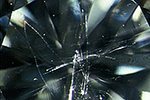
Surface Scratches
A scratch is a thin line across the surface of a diamond. Under magnification it usually appears dull or white and shows little or no apparent depth.
Minor scratches may sometimes be removed during repolishing, although any polishing operation can remove a small amount of diamond material.
Nicks
A nick is a small notch usually located at a facet junction, girdle edge or culet.
It generally shows little apparent depth at 10x magnification.
Pits
A pit is a tiny opening in the surface of a polished diamond.
Under magnification it may resemble a small white dot.
Abrasions
An abrasion consists of many tiny nicks along facet junctions.
These can give facet edges a fuzzy or whitish appearance.
Extra Facets
An extra facet is a polished facet that is not required by the normal cutting pattern.
Extra facets are often placed near the girdle and may be used to remove a surface irregularity or preserve weight.
Polish Lines
Polish lines are fine parallel grooves or ridges left during polishing.
They occur on individual facets and do not normally cross facet junctions.
Burn Marks
Excessive heat during polishing can leave a hazy area known as a burn mark or burned facet.
Naturals and Indented Naturals
A natural is a portion of the original rough diamond surface intentionally left on the polished stone.
Naturals are commonly found on or near the girdle and may be retained to preserve carat weight.
An indented natural is part of the original rough surface that extends below the polished surface of the finished diamond.
Chip
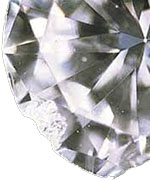
Diamond Chips
A chip is a shallow opening caused when a small piece of diamond breaks away from the surface.
Chips commonly occur around the girdle, facet junctions or culet and can result from impact, setting damage or wear.
Because chips can affect both appearance and structural integrity, they deserve careful examination.
Internal Diamond Flaws and Inclusions
Natural diamonds can contain a wide variety of internal characteristics formed during crystal growth or resulting from later stresses within the stone.
Many of these characteristics are microscopic and have little effect on the beauty or durability of the diamond.
Crystal Inclusions
A crystal inclusion is a mineral crystal enclosed within a diamond.
The crystal may be another diamond or a different mineral and may appear colorless, white, dark or colored under magnification.
Pinpoints
A pinpoint is a very small crystal that appears as a tiny dot at 10x magnification.
Individual pinpoints may have little effect on clarity, but numerous pinpoints grouped together can form a cloud.
Needles
A needle is a thin, elongated crystal that resembles a tiny rod under magnification.
A single fine needle may be difficult to see, while larger or grouped needles may have a greater effect on clarity.
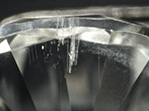
Clouds
A cloud is a group of tightly clustered pinpoints.
The individual pinpoints may be too small to distinguish separately, but together they can produce a cloudy or hazy appearance.
Knots
A knot is a diamond crystal that extends to the surface of the polished diamond.
Its significance depends on its size, location and effect on the surrounding surface.
Internal Graining
Internal graining results from irregularities in crystal growth.
It can appear as lines, curves or reflective areas and, in stronger cases, may influence transparency.
Feathers
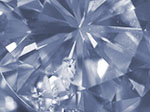
Feather Inclusions
A feather is the trade term for a break within a gemstone that often has a white, feathery appearance under magnification.
Small feathers may have little practical effect. Larger feathers, particularly those that reach the surface or occur near vulnerable areas such as the girdle, can sometimes have greater significance for durability.
Fractures
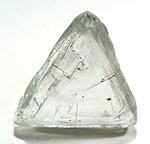
Fractures and Cleavage-Related Breaks
Diamonds can contain internal breaks caused by natural stress, crystal growth conditions or later impact.
Because diamond has distinct cleavage directions, certain breaks can propagate more readily along crystallographic planes if sufficient force is applied.
Large surface-reaching fractures or feathers should be examined carefully because some may have durability implications.
Fingerprint-Like Features
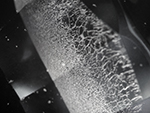
Fingerprint-Like Inclusion Patterns
Some gems can display networks of tiny healed fractures or inclusions that resemble a fingerprint under magnification.
Fingerprint-style patterns are more commonly associated with some colored gemstones than with diamonds, so identification should be left to a trained gemologist rather than assumed from appearance alone.
Dark or Black Inclusions
Dark inclusions are sometimes casually described as "carbon spots," but that term can be misleading.
A visible dark feature may be a mineral crystal, graphite, another inclusion type or a reflection of an inclusion.
Dark inclusions can have a greater visual effect than clear or low-contrast inclusions of similar size because they may stand out more strongly against the surrounding diamond.
Syngenetic Inclusions
In gemology, syngenetic inclusions are features that formed at approximately the same time as the host crystal.
Such inclusions can provide important information about the geological environment in which a diamond formed.
Epigenetic Features
Epigenetic features develop after the host crystal has already formed.
Later fractures, alteration or other geological events may create or modify such characteristics.
How Flaws Affect Diamond Clarity
A clarity grade is not based simply on whether a flaw exists. The grader evaluates how noticeable and significant the characteristics are within the diamond as a whole.
The five major clarity factors are:
- Size
- Number
- Position
- Relief or contrast
- Nature or type
How Diamond Flaws Affect Value
All other factors being equal, diamonds with fewer or less noticeable clarity characteristics are generally rarer and may command higher prices.
However, two diamonds with the same clarity grade can look different because their inclusions may have different sizes, locations, colors or patterns.
A small inclusion near the girdle may be far less noticeable than a dark inclusion of similar size directly beneath the center of the table.
Can Diamond Flaws Affect Durability?
Most small inclusions do not create a durability concern.
Larger feathers, chips, cavities or surface-reaching breaks located near vulnerable areas can sometimes increase the risk of damage during setting or wear.
A qualified jeweler or gemologist should evaluate any significant clarity characteristic when durability is a concern.
Clarity Enhancement and Fracture Filling
Some diamonds have been treated to make inclusions less visible.
One treatment known as fracture filling introduces a transparent material into a surface-reaching break to reduce its visibility.
Treatment does not remove the fracture itself, and treated diamonds require special consideration during cleaning, repair and resale.
Significant treatments should be disclosed when a diamond is sold.
Diamond Grading Reports and Clarity Plots
Laboratory grading reports often include a diagram known as a clarity plot.
The plot records the approximate type and position of significant inclusions and blemishes observed during grading.
Because many diamonds have unique clarity patterns, these characteristics can also help distinguish one diamond from another.
Diamond Flaw and Inclusion Buying Tips
- Examine the diamond itself rather than relying only on the clarity grade.
- Determine whether significant inclusions are visible without magnification.
- Pay attention to the location of dark inclusions beneath the table.
- Examine surface-reaching feathers, chips and cavities for possible durability concerns.
- Review the clarity plot and comments on an independent grading report.
- Ask whether the diamond has received any clarity-enhancing treatment.
- Consider clarity together with cut, color and carat weight.
Learn More About Diamond Clarity
Diamond Clarity Guide | Carat | Color | Cut