
Fancy Black Diamonds: Natural, Treated and Carbonado Diamonds
Fancy Black Diamonds
Understanding Natural Black Diamonds, Treated Black Diamonds and Carbonado
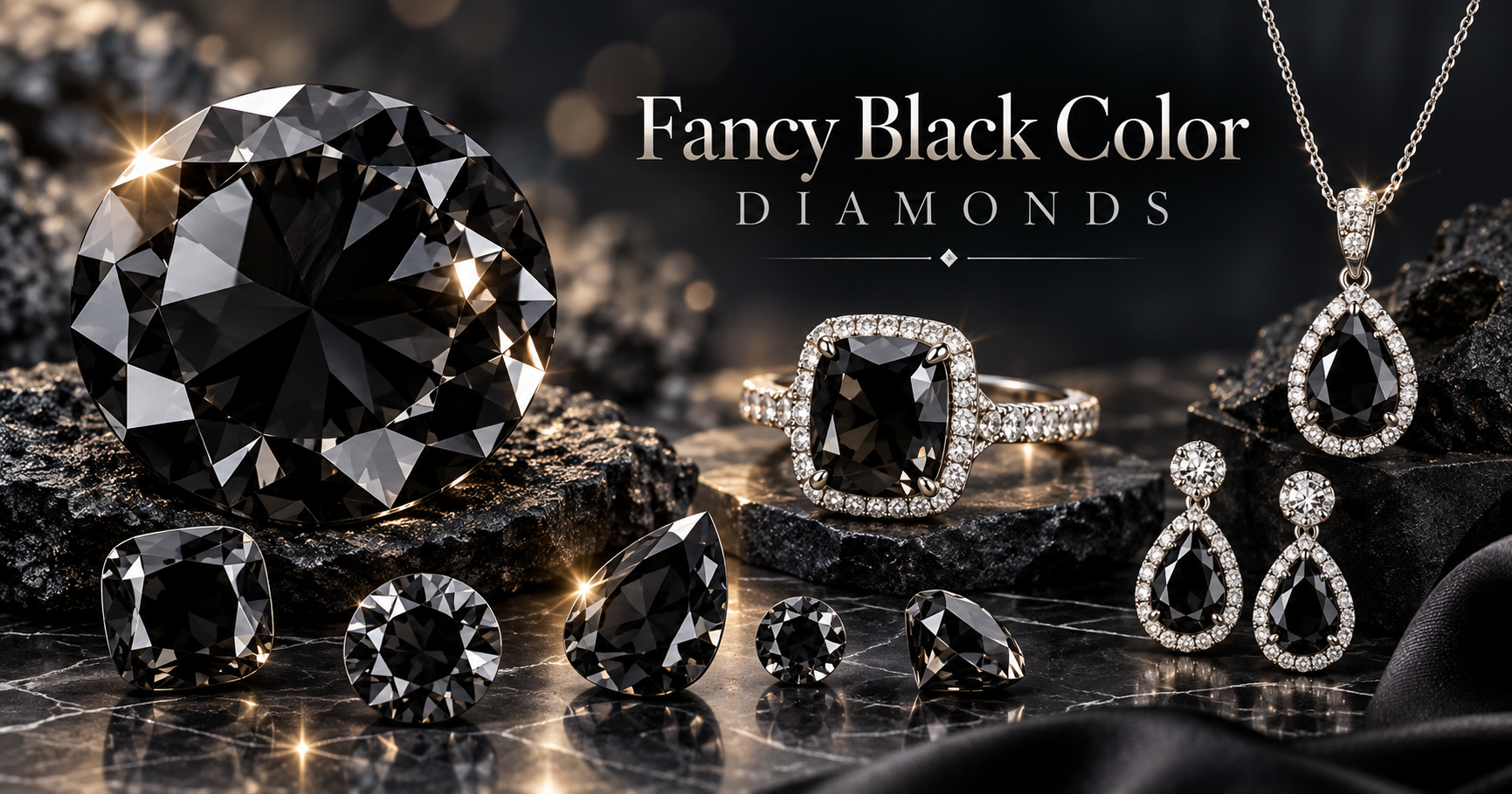
What Are Fancy Black Diamonds?
Black diamonds are diamonds that appear black or nearly black because they absorb much of the visible light that enters them. Unlike transparent colorless diamonds, many black diamonds are opaque or nearly opaque.
Black diamonds have become increasingly popular in modern jewelry because of their dramatic appearance and strong contrast with white diamonds, platinum, white gold, yellow gold and rose gold.
However, the term "black diamond" can describe several different types of material. A black diamond may have a naturally occurring black appearance, may have been treated to produce a black appearance, or may be a polycrystalline diamond material known as carbonado.
Natural Black Diamonds
Natural black diamonds receive their dark appearance from naturally occurring internal features.
Numerous microscopic dark mineral inclusions, graphite and other opaque inclusions can be distributed throughout the diamond, producing an overall black appearance.
Naturally black diamonds are considerably less common than treated black diamonds.
Treated Black Diamonds
Many black diamonds sold in today's jewelry market began as gray, brown or heavily included diamonds.
Heat treatment, irradiation or combinations of treatment methods can produce a very dark appearance that looks black when viewed normally.
Treated black diamonds are generally more readily available than naturally black diamonds.
Carbonado
Carbonado, sometimes called black diamond, is a distinctive polycrystalline form of diamond.
Instead of consisting of a single diamond crystal, carbonado is made up of many tiny diamond crystals joined together.
Carbonado should therefore be distinguished from ordinary single-crystal black diamonds used in most fine jewelry.
What Causes a Diamond to Look Black?
Natural black color is commonly associated with a very high concentration of dark inclusions distributed throughout the diamond.
These inclusions may include graphite and other minerals that absorb light and give the diamond an opaque black appearance.
Some naturally occurring black diamonds can also owe part of their appearance to structural defects or natural radiation effects.
How Black Diamonds Are Treated
Treatment can be used to transform diamonds with unattractive gray, brown or heavily included appearances into commercially desirable black diamonds.
High-temperature treatment can cause graphite to form or become more visually prominent within surface-reaching fractures, producing a darker appearance.
Irradiation can also alter a diamond's color. Some treated diamonds technically become extremely dark green but appear black under ordinary viewing conditions.
Natural Black Color
Natural black color developed without intentional human color treatment.
Natural-color black diamonds are generally rarer and may command a premium when accompanied by documentation from a respected gemological laboratory.
Treated Black Color
Treated black diamonds have had their appearance intentionally altered after mining.
They can provide the dramatic appearance of a black diamond at a substantially different price level from rare natural-color examples.
The Appearance of Black Diamonds
Black diamonds have a distinctive appearance that differs greatly from transparent white diamonds and most other fancy color diamonds.
Instead of being prized primarily for transparent brilliance, black diamonds are appreciated for their dark body color, reflective polished surfaces, facet pattern and contrast with surrounding metals and gemstones.
A finely polished black diamond can display bright reflections across its facets even though the body of the stone remains opaque.
Cutting Black Diamonds
Black diamonds can be challenging to cut and polish because abundant inclusions and internal fractures can make the material less predictable than many transparent diamonds.
The cutter must balance shape, symmetry, surface finish, durability and weight retention.
Black diamonds are available in many familiar shapes, including round, cushion, oval, pear, princess, emerald and radiant cuts.
Black Diamonds and Clarity
Traditional clarity concepts are less visually important for opaque black diamonds than they are for transparent colorless diamonds.
In fact, abundant dark inclusions are frequently the very reason a natural black diamond appears black.
Surface-reaching fractures, chips and cavities can still be important because they may affect durability and the quality of the polished finish.
Carat Weight
Black diamonds are sold in a wide range of carat weights, from small accent stones to large center stones.
As with other diamonds, larger stones can command higher total prices, but natural versus treated color remains an important factor.
Surface Finish
Polish is particularly noticeable on a black diamond because much of its visual appeal comes from light reflected from its polished facets.
A well-polished stone can produce sharp, attractive flashes of reflected light against its dark background.
What Determines the Value of a Black Diamond?
Black diamond value can depend on several characteristics:
- Whether the black appearance is natural or treated
- Carat weight
- Shape and cutting quality
- Surface polish
- Uniformity of black appearance
- Presence of chips, cavities or fractures
- Laboratory documentation
- Jewelry design and setting
- Provenance or historical importance
Black Diamond Rings
Black diamonds are used as dramatic center stones in engagement rings, fashion rings and men's jewelry.
Pendants and Earrings
Black diamond pendants and earrings provide strong contrast when surrounded by small white diamonds.
Black Diamond Pavé
Small black diamonds are frequently used in pavé settings, alternating-color designs and contemporary jewelry.
Black Diamonds and Jewelry Metals
The metal surrounding a black diamond can dramatically change the overall appearance of the jewelry.
White gold and platinum create strong black-and-white contrast. Yellow gold creates a warmer traditional look, while rose gold combines black with warmer pink and copper tones.
Why Laboratory Identification Is Important
The visual appearance of a black diamond alone may not reveal whether its color is natural or treatment-created.
Advanced gemological testing may be necessary to determine color origin.
When purchasing an important black diamond, an independent gemological report can help determine whether the diamond is natural and whether its black color is natural or treated.
Black Diamond Buying Tips
- Ask whether the black color is natural or treatment-created.
- Do not assume that every black diamond is naturally black.
- Examine the stone for an even and attractive face-up appearance.
- Inspect the polish and facet junctions carefully.
- Check for significant surface-reaching fractures, cavities or chips.
- Compare carat weight with visible face-up size.
- Consider the contrast between the black diamond and the surrounding metal or accent stones.
- Obtain an independent laboratory report for a significant natural-color black diamond.
Explore Fancy Color Diamonds
Fancy Color Diamonds | Diamond Color | Diamond Clarity | Diamond Cut