
Facts About Fancy Gray Diamonds
Fancy Gray Diamonds
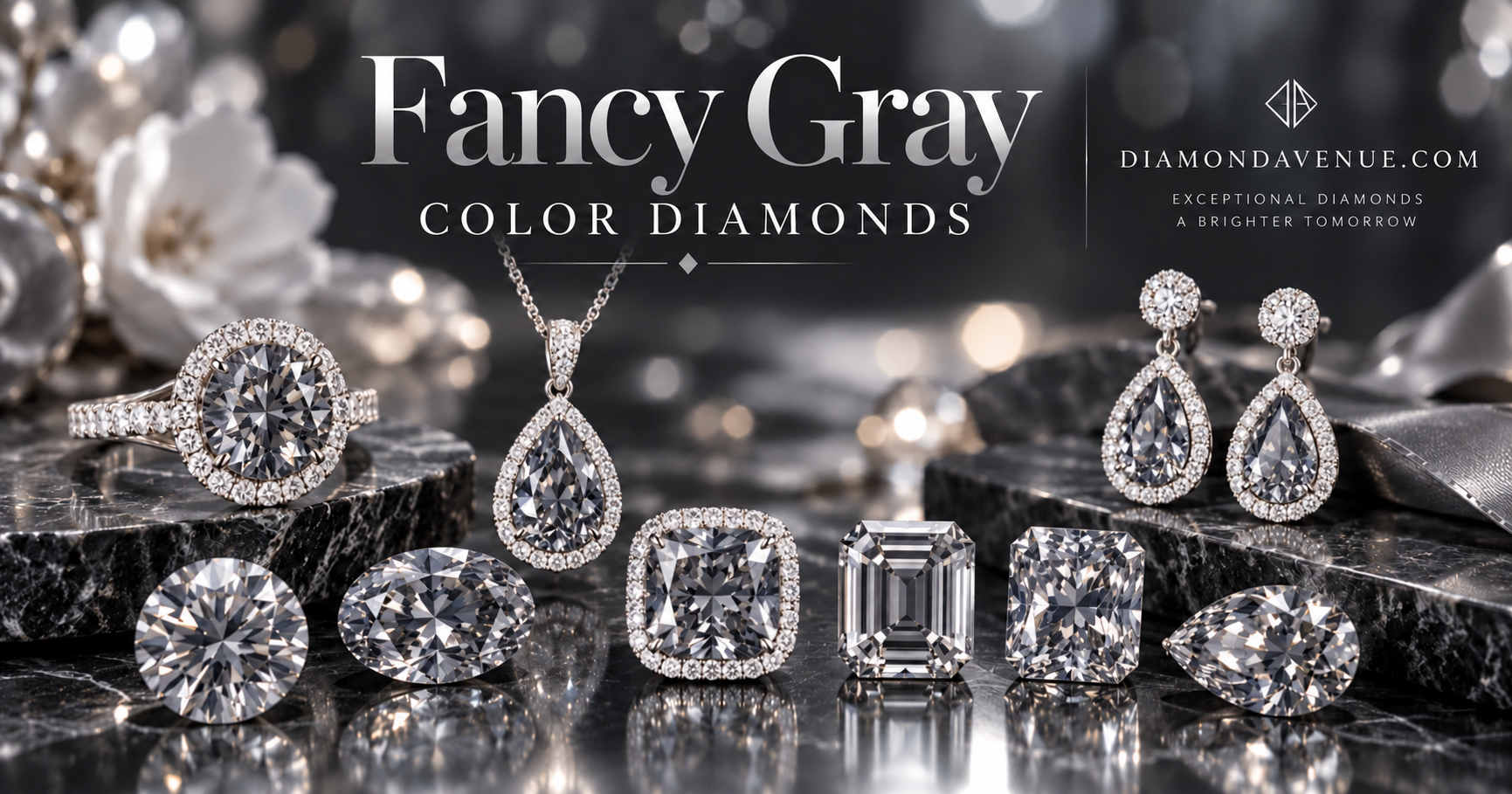
Natural gray diamonds possess a distinctive, sophisticated appearance that can range from soft silvery gray to deep charcoal tones. Although considerably less common than yellow or brown diamonds, gray diamonds have historically attracted less attention than some of the better-known fancy colors, making them an unusual and distinctive choice for collectors and fine jewelry.
Fancy Gray Diamonds
Natural gray diamonds can display colors ranging from pale silver and cool steel-gray to darker graphite and charcoal appearances. Secondary colors may produce some of the most unusual combinations found among natural colored diamonds.
What Are Fancy Gray Diamonds?
Gray diamonds are natural diamonds whose visible body color is predominantly gray rather than colorless, yellow or brown.
Their appearance can vary considerably. Some are pale and silvery, while others display stronger steel, smoke, graphite or charcoal-like colors. Depending upon their tone and saturation, a gray diamond can appear cool and metallic or deep and dramatic.
Gray is one of the less frequently encountered natural diamond colors. According to the Gemological Institute of America, most gray diamonds contain relatively high concentrations of hydrogen as an impurity, which probably contributes to their gray coloration.
A Distinctive Alternative
Gray diamonds offer a very different appearance from traditional colorless diamonds. Their subdued colors can complement contemporary jewelry designs, white metals and contrasting accent diamonds.
Historically, many gray diamonds have been priced below the rarest fancy colors such as strong pink, blue, green and red diamonds.
However, there is no single price category for gray diamonds. An individual stone's value can change dramatically according to its natural color origin, strength of color, secondary hues, carat weight, clarity, cut, attractiveness and rarity.
What Causes the Gray Color in a Diamond?
A diamond consists primarily of carbon atoms arranged in an extremely strong crystal lattice. Small changes within that lattice, trace impurities or structural defects can alter the way the diamond absorbs visible light and therefore change its apparent color.
GIA research indicates that many naturally gray diamonds contain relatively high concentrations of hydrogen. Hydrogen-related optical absorption is believed to be responsible for the coloration of many gray diamonds.
Other diamonds may display a gray component because of different defects, inclusions or combinations of color-producing mechanisms within the crystal. Consequently, not every gray diamond receives its appearance in exactly the same way.
Boron should not generally be described as the principal cause of ordinary gray diamonds. Boron is particularly associated with natural blue diamonds. Because some blue diamonds have a grayish appearance, the relationship between gray and blue can occasionally create confusion.
Gray Diamonds With Secondary Colors
Many colored diamonds do not display only one pure hue. A gray diamond may contain one or more modifying colors that strongly influence its overall appearance.
Examples may include:
- Bluish Gray
- Blue-Gray
- Violet-Gray
- Greenish Gray
- Brownish Gray
- Yellowish Gray
The exact terminology used on a laboratory report depends upon which hue is dominant and how strongly the secondary color contributes to the stone's appearance.
Blue and Violet Modifiers
Gray diamonds containing noticeable blue or violet components can be particularly unusual.
Natural blue diamonds themselves are extremely rare, and GIA notes that they commonly possess a slight gray component. Natural blue color is frequently associated with trace amounts of boron within the diamond crystal.
Attractive combinations involving gray and blue can therefore occupy a very different market category from diamonds displaying predominantly neutral gray.
The exact color description appearing on an independent laboratory report is especially important when determining rarity and value.
How Fancy Gray Diamond Color Is Graded
Fancy-color diamonds are evaluated differently from ordinary colorless and near-colorless diamonds. Laboratories examine three principal aspects of color:
- Hue — the basic visible color or combination of colors.
- Tone — how light or dark the color appears.
- Saturation — the strength or purity of the color.
These characteristics work together to determine the final color description.
GIA's colored-diamond terminology can include, in increasing or differing combinations of color strength:
- Faint
- Very Light
- Light
- Fancy Light
- Fancy
- Fancy Intense
- Fancy Vivid
- Fancy Dark
- Fancy Deep
Not every hue occurs naturally across every possible grade. The final laboratory designation depends upon the particular combination of hue, tone and saturation observed in the diamond.
Light Gray and the D-to-Z Scale
An important distinction exists between a diamond having a slight gray appearance and a diamond that qualifies as a fancy-color diamond.
GIA's traditional D-to-Z color scale extends from colorless at D through progressively greater amounts of color. At the lower end of this range, a diamond may exhibit light yellow, light brown or light gray.
Therefore, the mere presence of gray does not automatically mean that the stone will receive a fancy-color grade.
When Gray Becomes a Fancy Color
Once the color appearance falls outside the normal D-to-Z range and meets the requirements used for colored-diamond grading, the diamond is evaluated using the specialized fancy-color system.
This distinction can be important because a laboratory color designation is one of the most significant characteristics used to describe, identify and value a natural colored diamond.
Buyers should therefore avoid relying solely upon commercial descriptions such as "silver diamond," "smoky diamond" or "charcoal diamond."
Cut and Color Appearance
Fancy-color diamonds are often cut with a different objective from traditional colorless diamonds.
Whereas a colorless diamond is commonly cut to optimize brilliance and light return, the cutter of a fancy-color diamond may select proportions and a shape that strengthen the visible face-up color.
Radiant, cushion, oval, pear and other fancy shapes may be chosen when they help retain rough weight or concentrate attractive color within the finished stone.
Color Distribution
Ideally, an attractive gray diamond should present its color pleasingly across the visible face of the stone.
Color zoning, areas of lighter or darker color, inclusions and the orientation of the rough crystal can all influence the finished appearance.
Two diamonds carrying similar laboratory color descriptions may therefore look noticeably different when viewed side by side.
What Determines the Value of a Fancy Gray Diamond?
There is no simple price-per-carat formula that applies to every gray diamond. As with other naturally colored diamonds, several characteristics interact to determine desirability and market value.
Color
Color is normally the dominant consideration in fancy-color diamonds. Hue, tone, saturation, distribution and the presence of attractive secondary colors can all influence value.
Natural Origin
Confirmation that the color is naturally occurring rather than artificially produced is extremely important for collectible fancy-color diamonds.
Rarity
Unusual combinations of hue, large carat weights and particularly attractive color appearances can make individual gray diamonds much rarer than their general color category might suggest.
Carat Weight
Large natural colored diamonds are considerably more difficult to find than smaller examples. Significant increases in size can therefore increase rarity substantially.
Clarity
Clarity remains important, particularly when inclusions affect transparency or durability. However, attractive color commonly plays a larger role in the value of a fancy-color diamond than clarity alone.
Cut
Cut affects brilliance, apparent size and, most importantly for colored diamonds, the strength and distribution of visible face-up color.
Gray Diamonds in Jewelry
Gray diamonds can create a sophisticated look that differs substantially from both conventional colorless diamonds and brightly colored fancy diamonds.
Their neutral coloration works especially well with:
- Platinum
- White gold
- Yellow gold
- Rose gold
- Colorless diamond halos
- Blue or colored gemstone accents
Depending upon the stone and setting, the finished jewelry can appear understated and elegant or dramatic and contemporary.
Engagement Rings
A natural gray diamond can provide an alternative to the traditional colorless diamond engagement ring while retaining the durability and physical properties of natural diamond.
Pale silvery-gray stones can produce a restrained appearance, while deeper gray diamonds can create considerable contrast when surrounded by small colorless diamonds.
Gray diamonds with blue or violet modifiers can create especially unusual engagement rings, although attractive naturally colored examples may command substantial premiums because of their rarity.
Natural Color, Treated Color and Laboratory-Grown Diamonds
A gray appearance alone does not establish that a diamond's color is naturally occurring.
Diamonds can be subjected to treatments designed to alter their color, and laboratory-grown diamonds can also be produced in colors that resemble those occurring in natural diamonds.
These products can be attractive gems, but they should not be confused with untreated natural fancy-color diamonds.
For a valuable gray diamond represented as having natural color, an independent laboratory report should identify both the diamond and, where determinable, the origin of its color.
Buying a Fancy Gray Diamond
When comparing natural gray diamonds, consider the complete appearance of the stone rather than relying only upon carat weight or a commercial color name.
Important considerations include:
- Obtain an independent grading report from a recognized gemological laboratory.
- Confirm whether the color is natural or treated.
- Review the exact laboratory color description.
- Note any modifying hues such as blue, violet, green, yellow or brown.
- Examine the diamond face-up under neutral, consistent lighting.
- Evaluate whether the color is evenly and attractively distributed.
- Consider clarity characteristics that may affect transparency or durability.
- Compare similar certified diamonds rather than relying upon generalized price-per-carat figures.
Fancy Gray Diamond Quick Facts
- Gem: Natural diamond
- Primary color: Gray
- Appearance: May range from pale silver-gray to deep graphite or charcoal tones
- Commonly associated color mechanism: High concentrations of hydrogen are found in many gray diamonds
- Possible modifying colors: Blue, violet, green, brown and yellow
- Important grading factors: Hue, tone and saturation
- Major value factors: Natural color origin, color appearance, modifiers, carat weight, clarity, cut and rarity
- Identification: Independent laboratory grading is strongly recommended for valuable natural fancy-color diamonds
The Subtle Beauty of Fancy Gray Diamonds
Fancy gray diamonds occupy an unusual position within the world of natural colored diamonds. Their appeal is not based upon brilliant, highly saturated color alone, but upon subtle combinations of silver, steel, graphite and secondary hues that can give each stone an individual character.
From pale silvery diamonds suitable for elegant jewelry to exceptionally rare gray diamonds modified by blue or violet, the category offers a surprisingly broad range of appearances.
Because relatively small differences in color can substantially affect the identity, rarity and value of a fancy-color diamond, buyers should place particular importance on accurate gemological grading and natural-color determination.