
Fancy Brown Diamonds: Champagne, Cognac and Natural Brown Color
Fancy Brown Diamonds
Understanding Natural Brown Diamonds, Champagne Diamonds and Cognac Diamonds
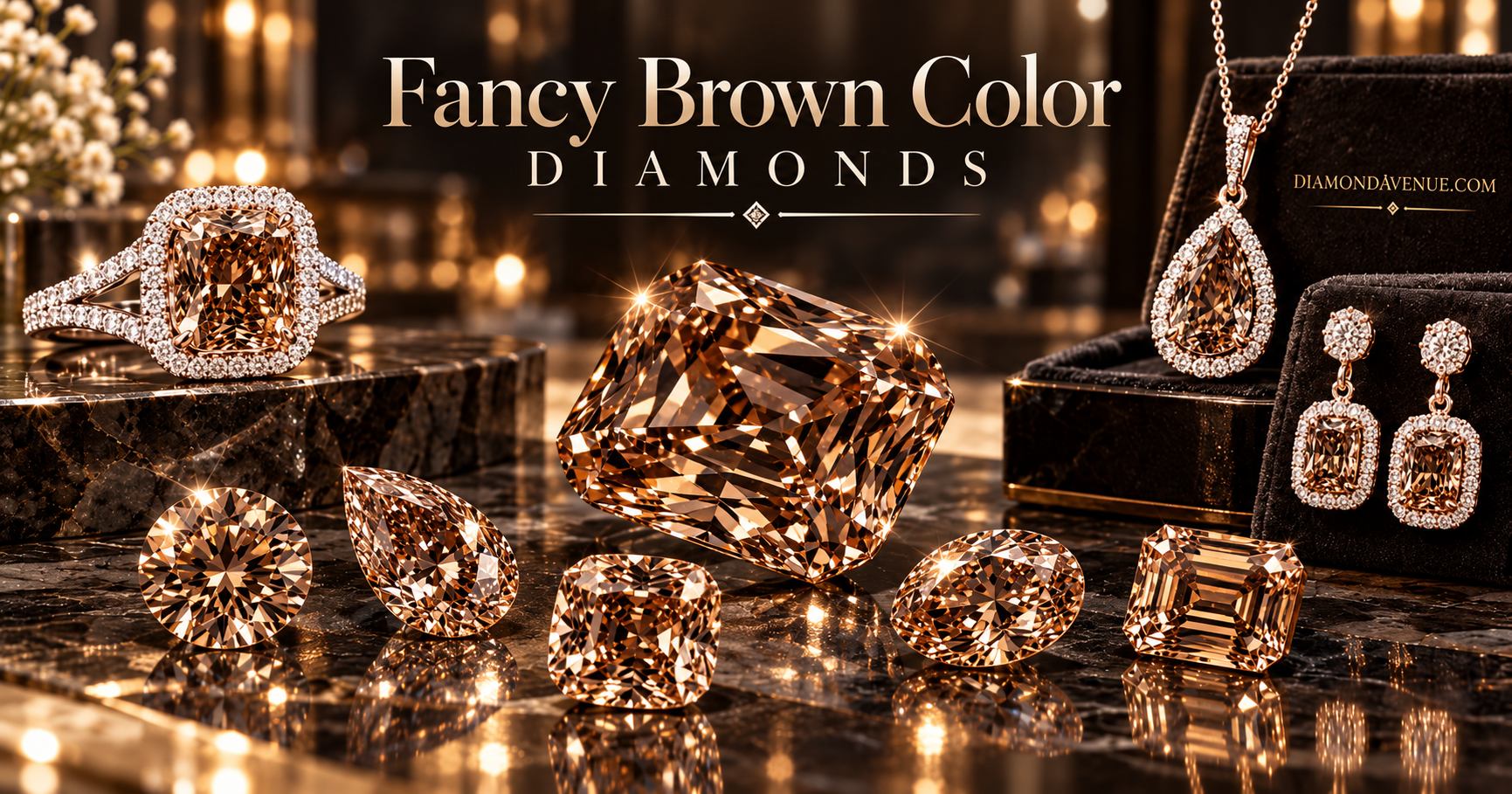
What Are Fancy Brown Diamonds?
Fancy brown diamonds are natural or laboratory-grown diamonds that display a noticeable brown body color strong enough to become an important part of the diamond's appearance.
Natural brown diamonds can range from light golden brown through warm honey, amber and reddish-brown tones to very deep chocolate-brown colors.
Brown is one of the more commonly encountered natural fancy diamond colors, making many brown diamonds more accessible than exceptionally rare natural blue, pink, green or red diamonds.
Their warm color has also made brown diamonds increasingly popular in contemporary engagement rings, fashion jewelry, earrings, pendants and men's jewelry.
The Argyle Mine and the Rise of Brown Diamonds
Brown diamonds were not always widely promoted as desirable jewelry stones.
Their commercial image changed substantially during the 1980s, when large quantities of brown diamonds entered the market from the Argyle diamond mine in Western Australia.
Argyle developed marketing campaigns that presented selected warm brown diamonds under evocative names such as Champagne and Cognac.
These descriptions helped transform consumer perception of brown diamonds and contributed to their wider acceptance in fine jewelry.
Champagne Diamonds
The term Champagne Diamond is commonly used in the jewelry trade to describe certain light to medium warm brown diamonds.
Many stones marketed as champagne may show golden, yellowish or honey-like secondary tones.
Champagne is a trade description rather than an official GIA fancy-color grade.
Cognac Diamonds
Cognac Diamond is another trade term generally associated with deeper, richer brown diamonds.
Stones marketed as cognac often display warm orange, reddish or deep golden-brown modifying colors.
Cognac is also a marketing description rather than a formal GIA color-grade category.
Brown Diamond Trade Names
Brown diamonds have been marketed under a variety of names intended to describe their warm appearance.
Common trade descriptions may include:
- Champagne
- Cognac
- Chocolate
- Honey
- Caramel
- Coffee
These names can be useful for marketing and describing appearance, but they should not be confused with standardized gemological color grades.
What Causes Brown Color in Diamonds?
The brown color of many natural diamonds is associated with distortion within the diamond's crystal lattice.
Geological stress and deformation can alter the atomic structure of a diamond after it forms deep within the Earth. These structural changes can create defects that absorb portions of visible light and produce brown coloration.
Brown diamonds may also display microscopic parallel bands known as brown graining, which are associated with deformation of the crystal structure.
Light Brown
Light brown diamonds can display delicate beige, tan, champagne or golden-brown appearances.
Medium Brown
Medium-tone brown diamonds often display warm honey, amber, caramel or rich golden-brown colors.
Dark Brown
Dark brown diamonds may display deep cognac, reddish-brown, coffee or chocolate-like appearances.
Brown Diamonds and the GIA Color Scale
Light brown color can occur within the traditional GIA D-to-Z diamond color-grading system.
Brown diamonds within portions of that scale can receive descriptions such as:
Faint Brown | Very Light Brown | Light Brown
When brown color falls outside the normal D-to-Z range and becomes sufficiently prominent, the diamond can enter the fancy-color grading system.
Fancy Brown Color Grades
Depending on the strength and tone of the brown color, GIA may use descriptions including:
Fancy Light Brown | Fancy Brown | Fancy Dark Brown
Brown diamonds can also contain secondary or modifying colors, producing descriptions such as yellowish brown, orangy brown, reddish brown or greenish brown.
Hue
Hue identifies the principal visible color and any modifying colors present in the diamond.
Tone
Tone describes how light or dark the brown color appears.
Saturation
Saturation describes the strength or intensity of the diamond's color.
Modifying Colors in Brown Diamonds
Natural brown diamonds often contain secondary colors that significantly influence their overall appearance.
Common modifying hues include:
- Yellowish Brown
- Orangy Brown
- Reddish Brown
- Greenish Brown
These modifying colors can create the wide variety of warm appearances that have made natural brown diamonds increasingly popular in jewelry.
Cutting Fancy Brown Diamonds
A cutter working with fancy brown rough may choose proportions and facet arrangements that strengthen the attractive face-up color of the finished diamond.
Cushion, radiant, oval, pear and other modified brilliant shapes can help concentrate color while still producing attractive brilliance.
The cutter must balance color, brilliance, symmetry, durability and carat-weight retention.
Brown Diamonds and Clarity
Clarity remains one of the Four Cs and can influence the appearance and value of a brown diamond.
However, in a fancy-color diamond, attractive color can be more important commercially than achieving the highest possible clarity grade.
A richly colored brown diamond can remain visually appealing even when it contains inclusions, provided those inclusions do not seriously interfere with appearance or durability.
Carat Weight
Brown diamonds occur in a broad range of sizes, from small accent diamonds to substantial center stones.
Larger natural fancy brown diamonds with attractive color, cut and clarity generally command higher total prices.
Face-Up Color
Two brown diamonds of similar weight can have very different visual appearances.
Color strength, modifying hues, cut and color distribution should therefore be considered along with carat weight.
Color Distribution
Attractive and relatively even face-up color is generally desirable in a fancy brown diamond.
Uneven concentrations of color can create visible areas that appear lighter or darker than the surrounding diamond.
Skilled cutting can sometimes improve the apparent distribution and strength of color.
Natural Brown Diamonds
A natural-color brown diamond obtained its color through geological processes before it was mined.
Naturally colored stones should be distinguished from diamonds whose color has been intentionally altered after mining.
Treated Brown Diamonds
Diamond color can be modified by treatment.
Treatments can alter the visual appearance and commercial value of a diamond, so treatment disclosure is important when comparing stones.
Laboratory-Grown Brown Diamonds
Brown diamonds can also be produced in laboratory-grown material.
Laboratory-grown diamonds have essentially the same basic crystal structure and major physical properties as natural diamonds, but their origin is different.
Natural, laboratory-grown and treated-color diamonds should therefore be clearly distinguished when evaluating rarity, provenance and value.
Brown Diamond Rings
Warm brown diamonds can make distinctive center stones for engagement rings and fashion rings.
Brown Diamond Earrings
Brown diamonds can be paired with white diamonds to create strong contrast in stud, drop and hoop earrings.
Brown Diamond Pendants
Champagne and cognac-toned diamonds can create warm, sophisticated pendants when paired with complementary metals.
Brown Diamonds and Jewelry Metals
Metal color can strongly influence how a brown diamond appears in jewelry.
Yellow gold can emphasize golden and honey tones, while rose gold can complement reddish and warm brown hues.
White gold and platinum create stronger contrast and can make the brown color stand out more distinctly.
What Determines the Value of a Brown Diamond?
The value of a fancy brown diamond can depend upon several interrelated factors:
- Natural versus treated color
- Natural versus laboratory-grown origin
- Hue
- Tone
- Saturation
- Attractive modifying colors
- Color distribution
- Carat weight
- Cut and face-up appearance
- Clarity
- Polish and symmetry
- Laboratory documentation
- Provenance or historical importance
Brown Diamonds and Relative Affordability
Natural-color diamonds as a group are rare, but brown is more abundant than some of the most coveted fancy colors.
As a result, many natural brown diamonds can offer buyers the distinctive appearance of a naturally colored diamond at a lower price than comparable natural blue, pink or red diamonds.
Exceptional stones with desirable color, large carat weight, high clarity or notable provenance can still be valuable gems.
Why a Gemological Laboratory Report Is Important
Visual inspection alone may not provide all the information needed to evaluate an important brown diamond.
Independent gemological testing can help determine whether the diamond is natural or laboratory-grown and whether its color is natural or treatment-created.
A laboratory report can also document characteristics such as carat weight, color, clarity, polish, symmetry and color distribution.
Fancy Brown Diamond Buying Tips
- Determine whether the diamond is natural or laboratory-grown.
- Determine whether its brown color is natural or treated.
- Evaluate hue, tone and saturation together.
- Look carefully at modifying colors such as yellow, orange, red or green.
- Compare face-up color rather than relying on trade names alone.
- Remember that Champagne and Cognac are marketing terms, not official GIA color grades.
- Examine color distribution and the quality of the cut.
- Review clarity characteristics that could affect appearance or durability.
- Obtain an independent gemological report for a significant fancy brown diamond.
Explore Fancy Color Diamonds
Fancy Color Diamonds | Fancy Blue Diamonds | Fancy Black Diamonds | Diamond Color | Diamond Clarity | Diamond Cut