Facts About Fancy Yellow Diamonds
Fancy Yellow Diamonds
Natural fancy yellow diamonds are among the most familiar and widely encountered fancy-color diamonds. Their colors can range from pale lemon yellow to rich golden yellow and highly saturated vivid yellow.
Their combination of attractive color, brilliance and broader availability compared with rarer colors such as red, green, blue and pink has made yellow diamonds an important category in both fine jewelry and the collector market.
Fancy Yellow Diamonds
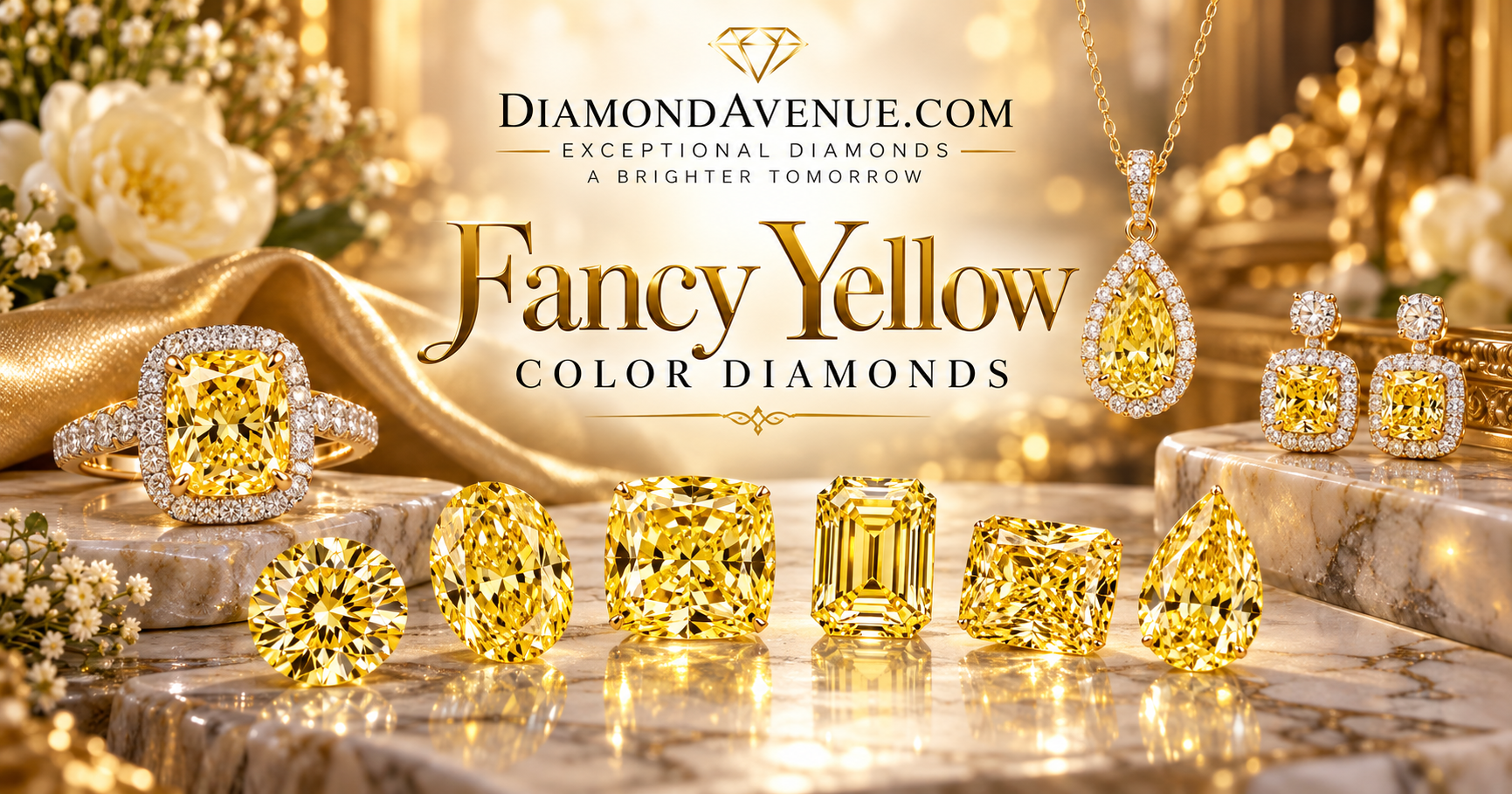
Natural yellow diamonds may display colors ranging from subtle yellow to deeply saturated golden and vivid yellow tones. Secondary hues such as orange, green or brown can also influence their appearance.
What Are Fancy Yellow Diamonds?
Fancy yellow diamonds are natural diamonds whose yellow color is strong enough to fall outside the traditional D-to-Z color-grading scale used for colorless and near-colorless diamonds.
Once yellow coloration becomes sufficiently strong, the diamond is evaluated under the fancy-color grading system, where the presence and strength of color become major considerations.
Yellow is one of the most frequently encountered natural fancy diamond colors, although strongly saturated and exceptionally large examples remain rare.
What Causes the Yellow Color?
The yellow color in most natural yellow diamonds is associated with nitrogen atoms incorporated into the diamond crystal during formation.
These nitrogen-related defects absorb portions of blue light from the visible spectrum.
Because some blue light is absorbed, the remaining light reflected and transmitted by the diamond can produce a visible yellow appearance.
Nitrogen and the Yellow Diamond Crystal
Diamond is composed primarily of carbon atoms arranged in a highly ordered crystal lattice. Small numbers of other atoms can sometimes become incorporated into that structure.
Nitrogen is one of the most important impurities associated with natural diamond color. The way nitrogen atoms are arranged within the crystal determines how they interact with visible light.
In many yellow diamonds, isolated nitrogen atoms or nitrogen-related defects absorb blue and violet wavelengths, allowing yellow coloration to become visible.
Fancy Yellow Diamond Color Grading
Fancy-color diamonds are evaluated according to characteristics that include hue, tone and saturation.
- Hue — the dominant visible color and any modifying colors.
- Tone — how light or dark the color appears.
- Saturation — the strength or intensity of the color.
Yellow diamonds can receive grading terminology such as:
- Faint
- Very Light
- Light
- Fancy Light
- Fancy
- Fancy Intense
- Fancy Vivid
- Fancy Deep
- Fancy Dark
The final grade depends upon the combined effect of hue, tone and saturation rather than color strength alone.

Fancy Light Yellow
Fancy Light yellow diamonds display a noticeable yellow color while retaining a comparatively lighter overall appearance.

Fancy Yellow
Fancy yellow diamonds exhibit a stronger and more obvious yellow body color than Fancy Light examples.

Fancy Intense Yellow
Fancy Intense yellow diamonds show substantial saturation and can display a rich golden appearance.

Fancy Vivid Yellow
Fancy Vivid yellow diamonds possess exceptionally strong saturation and can display brilliant, highly concentrated yellow color.
Secondary Colors and Modifying Hues
Many natural yellow diamonds contain secondary colors that modify the dominant yellow hue.
The modifier is included in the laboratory color description and can significantly influence both appearance and market desirability.
Orangy Yellow
Orange modifiers can give a yellow diamond a warmer, richer and sometimes golden appearance.
Greenish Yellow
Green modifiers can create colors ranging from lime-yellow to yellow-green, depending upon which hue is dominant.
Brownish Yellow
Brown modifiers can produce warmer and more subdued yellow tones ranging toward honey, amber or golden brown.
Pure Yellow Diamonds
A diamond described simply as yellow, without an additional hue modifier, is often referred to in the trade as an unmodified or pure yellow diamond.
Strongly saturated unmodified yellow diamonds can be particularly attractive because their color is dominated by yellow rather than another hue.
Are Modified Yellow Diamonds Less Valuable?
A modifying color does not automatically make a yellow diamond less valuable.
Value depends upon the entire appearance of the stone, including the desirability of the color combination, saturation, tone, size, cut and rarity.
Some attractive orangy yellow or greenish yellow diamonds can be highly desirable in their own right.
Where Are Yellow Diamonds Found?
Natural yellow diamonds have been recovered from diamond-producing regions in several parts of the world, including Africa, Russia, Australia, Canada and South America.
South Africa has historically been associated with a number of important and strongly colored yellow diamonds, including some of the most famous examples ever discovered.
Geographic origin alone, however, does not determine the color intensity or value of an individual yellow diamond.
What Is a Canary Diamond?
The term Canary Diamond is a popular trade and marketing expression for an attractive, strongly colored yellow diamond.
"Canary" is not an official laboratory color grade. A grading laboratory instead uses standardized descriptions such as Fancy Yellow, Fancy Intense Yellow or Fancy Vivid Yellow.
Buyers should therefore rely on the color description appearing on an independent laboratory report rather than on a commercial term alone.
Cut Can Enhance Yellow Color
Fancy-color diamonds are often cut with different priorities from traditional colorless diamonds.
A cutter may choose proportions that concentrate the visible color and produce a stronger face-up yellow appearance.
This is one reason fancy shapes and modified brilliant designs are frequently seen in yellow diamonds.
Popular Yellow Diamond Shapes
Yellow diamonds are found in many traditional and fancy shapes, including:
- Radiant
- Cushion
- Oval
- Pear
- Round
- Emerald
- Marquise
- Heart
What Determines the Value of a Fancy Yellow Diamond?
Color is usually the most important value factor in a fancy-color yellow diamond, but it is not the only consideration.
Important factors include:
Color Intensity
Stronger and more attractive saturation can increase desirability, particularly in Fancy Intense and Fancy Vivid stones.
Hue and Modifiers
Pure yellow and modified yellow diamonds can have different market characteristics depending upon the beauty and rarity of the color combination.
Carat Weight
Large strongly colored natural yellow diamonds are substantially rarer than small examples.
Color Distribution
Even and attractive face-up color can enhance the visual appeal of a yellow diamond.
Cut
Cut influences brilliance, apparent size, weight retention and the strength of visible face-up color.
Clarity
Clarity remains important, although exceptional color can sometimes outweigh minor inclusions that do not significantly affect beauty or durability.
Famous Yellow Diamonds
A number of large and historic yellow diamonds have become famous because of their size, color, provenance and exceptional rarity.
Tiffany Diamond
The Tiffany Diamond is one of the world's best-known yellow diamonds and is famous for its large size, intense color and long association with Tiffany & Co.
Golden Jubilee
The Golden Jubilee is one of the largest faceted diamonds in the world and is noted for its distinctive warm yellow-brown color.
Incomparable Diamond
The Incomparable Diamond is a famous large yellow diamond celebrated for its unusual history, size and distinctive shape.
Natural, Treated and Lab-Grown Yellow Diamonds
A yellow appearance alone does not prove that a diamond's color developed naturally.
Diamond treatments can alter color, and laboratory-grown diamonds can also display yellow coloration.
Natural fancy yellow diamonds, treated natural diamonds and laboratory-grown yellow diamonds are different categories and should be clearly identified.
For an important natural fancy yellow diamond purchase, an independent laboratory grading report is strongly recommended.
Yellow Diamonds in Jewelry
Yellow diamonds are especially popular in rings, earrings, pendants and other fine jewelry because their warm color can create striking contrast with surrounding colorless diamonds.
Popular metal choices include:
- Yellow gold
- White gold
- Platinum
- Rose gold
Yellow Diamond Engagement Rings
Fancy yellow diamonds are a popular alternative to traditional colorless diamond engagement rings.
Yellow gold can reinforce the warm appearance of the center stone, while platinum or white gold can create greater visual contrast.
Colorless diamond halos and side stones can further emphasize the yellow color of the center diamond.
Buying a Fancy Yellow Diamond
Buyers should evaluate a fancy yellow diamond as a complete gemstone rather than relying on color grade or carat weight alone.
Important considerations include:
- Obtain a grading report from a respected independent gemological laboratory.
- Confirm whether the diamond is natural or laboratory-grown.
- Confirm whether the yellow color is natural or treated.
- Review the exact color grade.
- Note any modifying hues such as orange, green or brown.
- Examine the strength and evenness of the face-up yellow color.
- Compare the cut, clarity and carat weight with similar certified diamonds.
- Evaluate the diamond under neutral and consistent lighting.
Fancy Yellow Diamond Quick Facts
- Gem: Natural diamond
- Primary color: Yellow
- Primary color mechanism: Nitrogen-related defects within the diamond crystal
- Relative occurrence: One of the more commonly encountered natural fancy-color diamond categories
- Possible modifying colors: Orange, green and brown
- Common fancy grades: Fancy Light, Fancy, Fancy Intense, Fancy Vivid, Fancy Deep and Fancy Dark
- Important value factors: Hue, tone, saturation, modifiers, carat weight, color distribution, cut and clarity
- Trade term: Canary Diamond
- Famous examples: Tiffany Diamond, Golden Jubilee and Incomparable Diamond
- Laboratory grading: Recommended for important natural fancy yellow diamonds
The Appeal of Natural Fancy Yellow Diamonds
Fancy yellow diamonds combine the brilliance and durability of diamond with a broad range of warm, attractive natural colors.
Their relative availability compared with rarer fancy colors gives buyers a wide selection of sizes, shapes and intensity grades, while exceptional Fancy Intense and Fancy Vivid stones can still be remarkably rare.
From subtle Fancy Light yellow diamonds to richly saturated vivid stones, natural yellow diamonds occupy an important place in both fine jewelry and the broader world of fancy-color diamonds.